CALPRODUCT-NI-008: NISP IPC Verification
Parent requirement
Scheduling
Once, during PV phase. Once during routine phase after 1 year or later, when unallocated time would increase.
It should be repeated if single hot pixels in darks show significant evolution over time, likely due to radiation damage.
Time-critical
No
Dependencies
None
Objective
Obtain measurements to verify the Interpixel Capacitance (IPC) matrix obtained on ground, using the single pixel reset (SPR) method.
IPC is a localized form of electronic cross-talk. The IPC spreads charge from the pixel in which it was collected to the adjacent pixels, prior to readout, because of capacitive coupling between pixels. IPC broadens the PSF and smoothes the Poisson noise, and hence must be corrected before e.g. determining the gain and bad pixel maps. It can also affect the astrometry in case the IPC matrix is asymmetric. The distribution of the IPC is very narrow, i.e. it is expected to change very little as a function of detector position, and also over time. The IPC could be flux-dependent below 5000 e-.
Biesiadzinski+ (2014) and Chang (2009) report increasing IPC for decreasing temperatures, which could be relevant when comparing the in-flight IPC data with the on-ground characterization.
IPC is wavelength-independent and must not be confused with charge-diffusion, which has a similar appearance. Charge-diffusion is wavelength-dependent, as photons with different energy create photo-electrons at different depths in the detector.
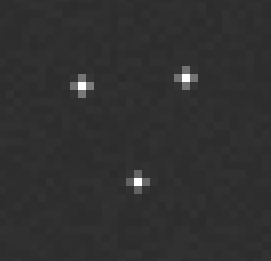
Figure 4: Typical appearance of the interpixel capacitance.
Fulfilled by
CALBLOCK-PV-011: NISP IPC Verification
CALBLOCK-F-007: VIS Nonlinearity, PTC, BFE and NISP LED flats (optional)
Data volume
64*NP = 5632 MB, assuming photo-MACC file size
Processing input
Ground Processing Input Data: BPM
Data Description: 64 (or 128) NISP images (depending on whether each ramp or only difference is sent to ground). Format, header unclear.
Processing method
To some degree, the IPC could also be extracted from cosmics. However, since cosmics usually extend over several pixels, the IPC matrix is not accessible in a straight-forward and accurate way. Also, cosmics create charges at different depths and IPC must then be distinguished from charge diffusion. Therefore, the SPR method is highly preferred, and currently no tools are in place or under development to extract the IPC matrix from cosmics.
Processing output
IPC matrix per pixel for all detectors based on the SPR method. Comparison to ground characterization data.
Required accuracy, constraints
Currently (2019-04-09) there is no CalCD-B requirement for the IPC correction. It is assumed that it can be corrected perfectly (the full error budget for electronic ghosting goes to ghost images).
Once a requirement has been set for the accuracy of the IPC correction, the accuracy of the IPC measurement during PV phase can be set (TBD % within the ground characterization).
Processing tools
TBW
Validation
The IPC is not corrected at pixel level. Therefore, the CalProduct cannot be verified directly by looking for residuals in the processed survey data. Possible validation methods are to extract e.g. 3x3 superpixels around highly significant hot pixels in the slew darks, measure the IPC and compare with the CalProduct. If necessary, hot pixels from the same detector must be stacked statistically to achieve sufficient S/N (assuming the IPC does not vary too much within a detector).
Alternatively, the Poisson noise (smoothed by IPC, after correction by PRNU) in the LED flats can be evaluated and compared to the expected Poisson noise (in the absence of IPC). The CalProduct should predict the correct amount of attenuation in the Poisson noise.
These measurements can be automatized and do not require a substantial amount of processing. The CalProduct should be validated e.g. every 6 months to check for increasing radiation damage.
Recovery
The IPC is an inherent property caused by local physics at the detector pixel level. It is therefore expected to be fairly stable and mostly subject to radiation damage, only.
Quality control parameters
DataModel: https://gitlab.euclid-sgs.uk/
Contact person
NISP-P calibration scientist